
By Dyuti Khulbe/Public Praxis Forum
A UPR, or Universal Periodic Review, is one of those UN mechanisms that sounds highly technical and distant until you actually see how political, human, and imperfect it really is. On paper, it is a process where every UN Member State has its human rights record reviewed by other countries every few years. In practice, it is a room full of diplomacy, pressure, negotiation, criticism, image management, and sometimes genuine attempts at accountability- all happening at once.
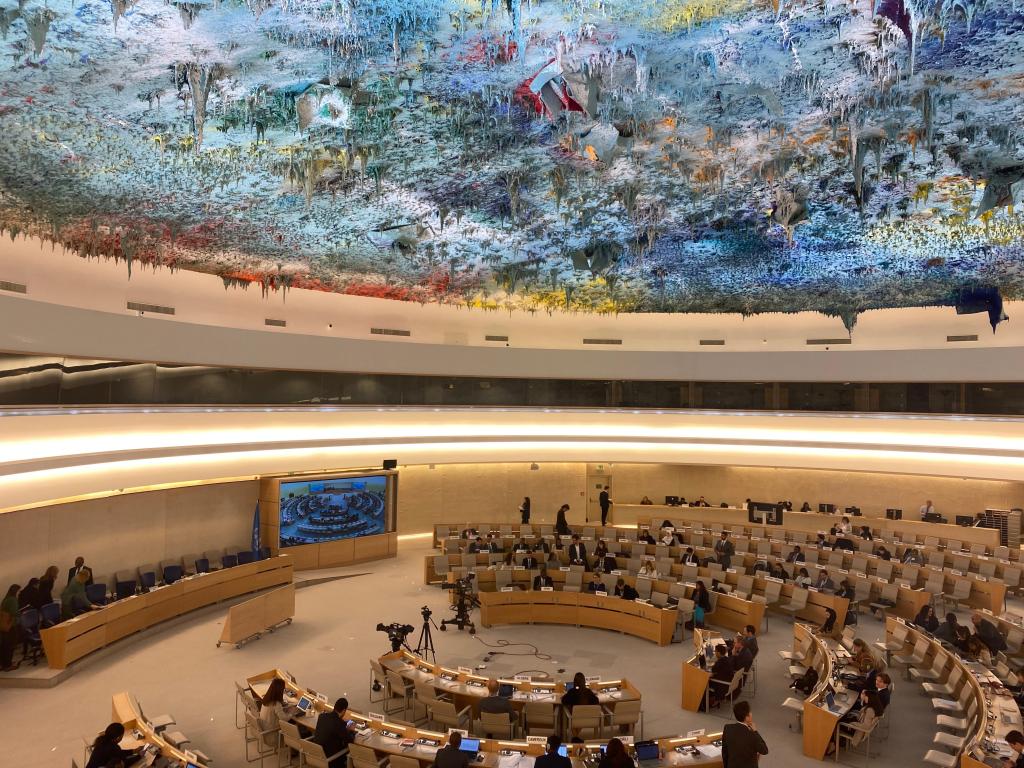
The process takes place under the United Nations Human Rights Council in Geneva. Every country, regardless of size, power, or political system, goes through the review. That is one of the reasons the mechanism became important when it was created in 2006. Earlier human rights mechanisms were often criticised for selectively targeting certain countries while powerful states escaped scrutiny. The UPR was introduced with the idea that if everyone is reviewed equally, the process would feel less politically biased and more universal.
The review itself is based on three main sources of information.
- The first is the national report submitted by the country under review. This is where governments present their own narrative- the laws they passed, the policies they implemented, the institutions they created, and the progress they claim to have made. These reports are usually polished and diplomatic. Governments understandably try to present themselves in the best possible light.
- The second source is information compiled by the Office of the High Commissioner for Human Rights from UN treaty bodies, special rapporteurs, and other official UN mechanisms. This provides a more institutional picture of ongoing concerns and recommendations.
- The third source, and often the most revealing one, comes from civil society organisations, activists, researchers, national human rights institutions, journalists, and grassroots groups. Their submissions can include documentation on violations, discrimination, censorship, violence, environmental harm, political repression, or failures in access to justice that governments may not acknowledge themselves.
This is where the process becomes particularly important. For many smaller organisations and affected communities, the UPR can become one of the few international spaces where their concerns formally enter a UN process. A local organisation documenting caste discrimination, attacks on journalists, indigenous land rights violations, or gender-based violence may suddenly find those issues raised before dozens of states in Geneva.
The actual review is conducted in an interactive session where countries make recommendations to the state under review. Some recommendations are meaningful and specific:
- repeal discriminatory laws
- protect freedom of expression
- investigate enforced disappearances
- strengthen indigenous land protections
Others can be extremely diplomatic or vague. Politics shapes the room more than many people realise. Friendly states often praise each other, while geopolitical rivalries sometimes influence criticism. Human rights language and diplomacy constantly intersect inside the UPR process.
And this is also why the UPR should neither be romanticised nor dismissed entirely.
It does not “solve” human rights violations. Countries can reject recommendations. Governments sometimes accept recommendations publicly without implementing them meaningfully. In some contexts, activists who engage with international mechanisms may even face backlash at home.
But despite its limitations, the process creates documentation, visibility, pressure, and international record. Once an issue enters the UN system formally, it becomes harder to erase completely. Recommendations from the UPR are often later used by:
- civil society groups
- journalists
- researchers
- lawyers
- advocacy campaigns
- even governments themselves
to push for reforms or hold states accountable.
The most interesting thing about the UPR is probably this contradiction: it is simultaneously bureaucratic and deeply political, formal yet human, limited but still valuable. Much of its impact depends not only on what happens in Geneva, but on what organisations, communities, and advocates do with the process afterward at the national level.
At its best, the UPR creates a space where local realities briefly enter global conversation. At its worst, it can become a diplomatic performance. Most of the time, it exists somewhere in between.
- The implementation gap
One of the biggest criticisms of the UPR is the distance between recommendations and actual implementation. During the review, states can accept dozens or even hundreds of recommendations ranging from legal reform to protections for vulnerable communities. But accepting recommendations and implementing them are two very different things. Once the review ends, there is no strong enforcement mechanism ensuring governments follow through on their commitments. This is where civil society organisations, researchers, journalists, and national human rights institutions often step in. Many spend years monitoring progress, producing follow-up reports, engaging ministries, and documenting whether promises translated into meaningful change. In many ways, the credibility of the UPR depends less on what is said in Geneva and more on what happens nationally afterward.
- The role of “recommendation politics”
The recommendations made during the UPR are not purely technical or neutral; they are deeply shaped by diplomacy and politics. Some states make direct and specific recommendations on issues such as freedom of expression, arbitrary detention, indigenous rights, or discrimination. Others use softer language that sounds constructive but avoids creating real pressure. Political alliances often influence how states engage with one another. Countries with close economic or strategic relationships may avoid criticism, while geopolitical tensions can shape which violations are highlighted publicly. As a result, the UPR becomes not only a human rights mechanism but also a space where diplomacy, image management, and international politics constantly interact.
- The idea of peer review
Unlike international courts or investigative bodies, the UPR functions as a peer review mechanism between states. Governments review one another’s human rights records and make recommendations through dialogue rather than legal judgment. This distinction is important because the process is built more around cooperation and engagement than punishment. The idea behind this model is that states may be more willing to participate in a mechanism where every country is reviewed equally and where the focus remains on discussion rather than direct sanction. At the same time, this structure also creates limitations, since implementation often depends on political willingness rather than legal obligation.
- The tension between universality and power
The UPR was partly created to address criticism that international human rights mechanisms were selective and politically biased. In theory, the principle of universality means every country, regardless of size, power, or political system – undergoes review under the same process. However, global inequalities do not disappear inside the Human Rights Council. Powerful states often face different political realities than smaller or more isolated countries. Diplomatic influence, economic relationships, and geopolitical importance can shape both the tone of recommendations and the level of international pressure that follows. This creates an ongoing tension between the universal ideals of the mechanism and the unequal power structures that exist within international politics itself.
- The role of national-level advocacy
For many organisations and activists, the UPR is valuable not simply because it happens in Geneva, but because it can strengthen advocacy efforts at the national level. Civil society groups often use recommendations strategically to pressure governments, engage parliamentarians, support litigation, build coalitions, or generate media attention around neglected issues. In some countries, recommendations from the UPR become important tools for local advocacy because they provide international legitimacy to concerns already being raised domestically. The process therefore extends far beyond the review session itself. Much of its actual impact depends on how effectively communities and organisations use the mechanism within their own political and social contexts.
- The emotional and symbolic dimension
Although the UPR is often discussed in technical and institutional language, it also carries emotional and symbolic significance for many communities affected by human rights violations. For individuals and groups who feel ignored nationally, seeing their experiences formally acknowledged within an international process can matter deeply. Even when immediate change does not follow, the act of documentation and recognition can provide visibility, validation, and a sense that their realities are part of a larger global conversation. This symbolic dimension is difficult to measure, but it remains an important part of why many civil society groups continue engaging with the mechanism despite its limitations.
- The mechanism’s contradictions
The UPR is full of contradictions, and perhaps that is what makes it both frustrating and important. It is a highly bureaucratic process, yet deeply shaped by politics. It promotes universality, while operating within unequal global power structures. It creates visibility for violations, but cannot guarantee accountability. Some critics dismiss it as diplomatic theatre, while others see it as one of the few international spaces where smaller organisations and affected communities can enter global human rights discussions. In reality, the mechanism exists somewhere in between. Its effectiveness often depends not only on states, but on how civil society, journalists, researchers, and communities continue using the process long after the review itself has ended.
Featured image: Human Rights and Alliance of Civilizations Room, Palais des Nations, Geneva. Photograph by the author.


Leave a Reply