
By Dyuti Khulbe/Public Praxis Forum
Mention human rights work and many people imagine investigations, international conferences, high-profile advocacy campaigns, or moments of public accountability. These images are not entirely inaccurate. They exist. But they represent only a small part of what the work often looks like in practice.
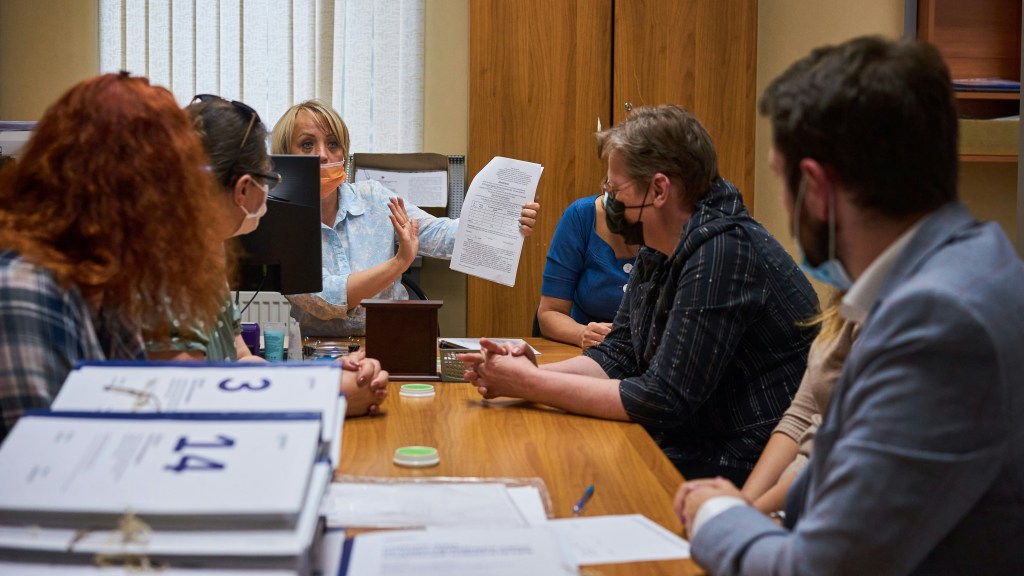
Much of human rights work happens far away from public attention, through processes that are slower, less visible, and often more uncertain than people expect. It unfolds in consultations, policy discussions, document reviews, stakeholder meetings, field visits, and countless conversations that rarely make headlines. Progress is often difficult to measure, setbacks are common, and even defining what success looks like is not always straightforward.
Working across journalism, development communication, and human rights spaces, I have often encountered the assumption that change happens through landmark reports, major campaigns, or moments of public pressure. These moments certainly matter, but over time I have realised that they represent only the visible part of a much larger process. Behind every public report, recommendation, or advocacy campaign lies months, sometimes years, of work that remains largely invisible.
Understanding that invisible work is perhaps one of the most important ways to understand the human rights field itself. Yet this is also the side of human rights work that receives the least attention. Reports, conferences, and public statements become the visible markers of the profession, while the countless processes that make those moments possible often remain hidden. Understanding those processes helps explain not only how institutions function, but also why meaningful change is rarely immediate.
The Work Nobody Sees
Much of human rights work is surprisingly ordinary.
It involves reading lengthy reports, reviewing legal frameworks, comparing recommendations across countries, attending meetings that end without clear conclusions, speaking with stakeholders who hold very different perspectives, drafting submissions, revising documents repeatedly, and trying to translate complex realities into language that institutions can engage with.
From the outside, these tasks can appear administrative or procedural. In many ways, they are. But they are also the foundations upon which larger moments of advocacy are built.
Consider, for example, a recommendation made during a UN review process. What eventually appears as a brief statement delivered during an international session is often the result of months of consultation between civil society organisations, researchers, legal experts, affected communities, and government representatives. Evidence has to be collected, verified, organised, and presented in ways that are both accurate and persuasive. Different organisations may work together to identify priorities, negotiate language, or decide which issues require immediate attention and which may need to wait for another opportunity.
The same is true for many reports that receive public attention. By the time a report is published, much of the work has already happened behind the scenes. There are consultations with communities, interviews, background research, legal analysis, fact-checking, internal reviews, and discussions about language that can sometimes take weeks. Every sentence carries implications, particularly when organisations are working within political or diplomatic environments where precision matters.
This slower pace can feel frustrating, particularly for those entering the field with expectations of immediate impact. Human rights work is often imagined as responding quickly to crises, exposing injustice, and holding power to account. Those moments certainly exist, but they are only one part of a much larger ecosystem. Much of the work is incremental, requiring persistence rather than urgency, consistency rather than visibility.
Perhaps this is one of the less understood realities of the profession. Human rights work is rarely defined by dramatic breakthroughs. More often, it is shaped by sustained effort, careful documentation, and a willingness to continue working even when progress feels uncertain.
This slower rhythm does not make the work less meaningful. If anything, it reflects the complexity of the problems human rights practitioners are trying to address. Structural discrimination, armed conflict, environmental injustice, or unequal access to education are not issues that emerge overnight, and they rarely disappear through a single intervention. Addressing them requires institutions that can gather evidence, build relationships, facilitate dialogue, and maintain pressure over long periods of time.
It is precisely because so much of this work happens outside public view that it is often overlooked. Reports, conferences, and public statements may become the visible symbols of human rights work, but they are only the tip of a much larger process, one built on preparation, collaboration, negotiation, and persistence.
Between Advocacy and Diplomacy
One of the most common assumptions about human rights work is that if something is clearly wrong, the appropriate response is simply to speak out. While this instinct is understandable, the reality is often far more complicated.
From the perspective of affected communities, urgency is not an abstract concept. When rights are being violated, delays can feel indistinguishable from indifference. Communities experiencing discrimination, conflict, displacement, or environmental harm understandably seek immediate action. Waiting months or years for consultations, reviews, or negotiations is difficult when the consequences are lived every day.
Institutions, however, often operate differently.
Whether within governments, courts, UN bodies, or civil society organisations, much of human rights work unfolds through procedures designed to establish evidence, build consensus, preserve legitimacy, and create outcomes that can withstand legal and political scrutiny. These processes are rarely fast. They involve consultation, verification, negotiation, internal review, and constant engagement with actors who may fundamentally disagree with one another.
This difference often creates frustration on all sides.
Communities understandably ask why action takes so long, while institutions worry that acting without sufficient evidence, legal grounding, or political support may ultimately weaken both credibility and long-term impact.
Neither perspective is entirely wrong.
Human rights work therefore exists in a difficult space between urgency and process. Urgency reminds institutions why the work matters. Process seeks to ensure that action is credible, durable, and capable of surviving political change. One cannot simply replace the other.
This also explains why some of the most important conversations happen away from public attention. Meetings between civil society organisations and government representatives, consultations with affected communities, negotiations over language in international resolutions, or discussions about how evidence should be presented rarely receive public recognition. Yet these quieter moments frequently shape what eventually becomes possible.
Not every battle is fought publicly. Sometimes the most significant progress begins long before a report is published or a recommendation is adopted.
Recognising this does not mean accepting institutional limitations without criticism. Rather, it means understanding that meaningful change often requires multiple approaches operating simultaneously. Public advocacy, legal action, community organising, diplomacy, journalism, academic research, and policy engagement each play different roles. None is sufficient on its own, but together they create the conditions under which accountability becomes more likely.
The Gap Between Institutions and Lived Realities
One of the most challenging aspects of human rights work is learning to move between two very different worlds.
On one side are communities living through conflict, discrimination, displacement, environmental degradation, or political exclusion. Their experiences are immediate, deeply personal, and rarely fit neatly into institutional categories.
On the other side are international organisations, governments, courts, and policy processes that rely on legal definitions, technical language, evidence standards, reporting formats, and diplomatic procedures.
Bridging these worlds is far more difficult than it might first appear.
Experiences that are deeply emotional and deeply human often need to be translated into institutional language before they can enter formal processes. Stories become submissions. Testimonies become evidence. Everyday experiences of injustice are organised into legal arguments, policy recommendations, or statistical indicators.
This translation is necessary. Institutions require common frameworks through which they can compare situations, identify patterns, and formulate responses. Without some degree of structure, international cooperation would be almost impossible.
Yet something can also be lost in the process.
The complexity of people’s lives does not always fit comfortably within institutional categories. Communities rarely experience violations in isolation. Environmental harm, displacement, discrimination, poverty, conflict, gender inequality, and access to education often overlap in ways that cannot easily be separated. Institutions, however, frequently organise their work into specific mandates, thematic areas, or legal frameworks.
The challenge, then, is not simply documenting reality. It is finding ways to communicate lived experiences without reducing them to technical language that strips away their complexity.
Perhaps this is one of the least visible forms of human rights work. It is not only about documenting violations or producing evidence. It is also about translation, not between different spoken languages, but between lived realities and institutional systems.
Done well, this translation allows communities to enter spaces where decisions are made. Done poorly, it risks reducing complex human experiences to little more than policy terminology.
In many ways, this platform emerged from that same challenge. If institutions require specialised language to function, there is an equally important need to translate those institutional processes back into language that is understandable, accessible, and connected to the realities they are intended to serve.
When Progress Is Difficult to Measure
One of the more difficult aspects of human rights work is that meaningful progress rarely arrives in ways that are immediately visible.
Reports can be published. Recommendations can be adopted. Laws can be amended. Meetings can take place. New policies can be announced. These are often treated as signs of progress, and in many cases they are. But they do not always tell us whether people’s lives have actually changed.
This is perhaps one of the greatest challenges for practitioners working within institutions. Activity is relatively easy to measure. Organisations can count reports, consultations, workshops, recommendations, or partnerships. Measuring whether those efforts have translated into greater dignity, safety, or justice for affected communities is considerably more difficult.
Change often unfolds gradually. Sometimes it becomes visible only years later. Sometimes it remains partial. Occasionally, progress in one area is accompanied by setbacks in another.
This uncertainty can be frustrating, but it also reflects the complexity of the issues human rights practitioners seek to address. Structural inequality, discrimination, conflict, or environmental injustice are rarely resolved through a single intervention. More often, they shift incrementally through the combined efforts of communities, institutions, governments, researchers, journalists, and countless others working across different spaces.
Why the Work Still Matters
History reminds us that many of the rights, protections, and institutions we consider ordinary today did not emerge overnight. They exist because generations of people were willing to work within imperfect systems while continuing to question, challenge, negotiate, and gradually reshape them. Progress rarely arrived in a straight line, and it almost never came as the result of a single report, campaign, or institution. More often, it was built through countless conversations, disagreements, compromises, and persistent efforts that, at the time, may have seemed insignificant.
Perhaps that is one of the more difficult lessons human rights work teaches. Meaningful change is rarely immediate, and institutions are rarely transformed by a single intervention. They evolve slowly, often unevenly, shaped by people who continue pushing their boundaries while recognising their limitations.
This does not mean accepting slow progress as inevitable or becoming comfortable with injustice. If anything, it requires holding two ideas at the same time: recognising the urgency of people’s lived realities while also understanding that durable institutional change often unfolds over years rather than weeks.
Perhaps hope in human rights work is not found in the belief that institutions will one day become perfect. Rather, it lies in the possibility that they can continue to become more responsive, more inclusive, and more accountable than they were before.
The distance between institutions and the people they are meant to serve may never disappear entirely. The work, perhaps, is to keep finding ways to make that distance a little smaller.
Featured image: Photo by Valery Tenevoy on Unsplash


Leave a Reply