
By Dyuti Khulbe/Public Praxis Forum
At COP28 in Dubai in 2023, countries agreed to transition away from fossil fuels in energy systems in a just, orderly and equitable manner. For the first time, a decision adopted under the UN climate negotiations explicitly referred to moving away from fossil fuels. It was an important step, although it did not establish a timetable for individual countries or specify exactly how the transition should take place.
Three years later, COP31 in Antalya exposed how difficult it remains to turn that commitment into a common direction. The conference concluded on 22 November 2026 without agreement on its proposed overarching Antalya Pact. One of the central disagreements concerned the absence of an explicit reference to fossil fuels in the final proposed text. The European Union, the United Kingdom and several other countries objected, while other governments resisted stronger language on the transition.
The disagreement was about more than a few words in a conference document. Countries were confronting difficult questions about the future of their energy systems, the economic consequences of reducing fossil-fuel dependence and the responsibilities they should share.
This raises a larger question: Why is the world struggling to agree on how to move away from fossil fuels, even after making a collective commitment to do so?
The answer involves much more than climate science. Coal, oil and natural gas are deeply embedded in national economies, electricity systems, transport, industrial production, employment, government revenues and international trade. Moving away from them requires changes across all these areas, and countries have very different interests and capacities when it comes to making those changes.
COP31 brought these differences into the open. Understanding them also requires looking beyond the conference negotiations and asking what a realistic alternative to fossil fuels would actually involve.
A commitment, but no common direction
The COP28 agreement was part of the first Global Stocktake under the Paris Agreement. The Global Stocktake is a process through which countries assess collective progress towards the agreement’s goals and consider what more needs to be done.
The decision called on countries to contribute to global efforts to transition away from fossil fuels in energy systems, in a just, orderly and equitable manner, accelerating action during the current decade. The language was important, but it was not a detailed plan for ending fossil-fuel production and use. It did not establish a single global timetable, specify how individual countries should reduce production and consumption, or settle how the economic costs of the transition should be shared.
Those questions were left to further negotiations and national implementation.
At COP30 in Belém in 2025, Brazil’s presidency promoted work on roadmaps for transitioning away from fossil fuels and halting deforestation. These initiatives sought to move the discussion towards implementation, although they did not create new binding obligations for all countries.
COP31 was another opportunity to build on the existing commitment. Instead, the negotiations exposed how difficult it remains to agree on what a collective transition should look like.
A group of 126 countries had called for the final conference text to include a clearer reference to transitioning away from fossil fuels. However, that language did not appear in the final proposed Antalya Pact. Several countries objected to the text, and the conference ended without consensus on the overarching agreement.
The absence of an agreed Pact does not undo the COP28 decision. Nor does it mean that work on the energy transition has stopped. Separate decisions were adopted at COP31 on issues including adaptation, climate finance and the Just Transition Work Programme. Countries also advanced work on a just transition mechanism, with further arrangements to be developed before its expected formal agreement at COP32.
Alongside the formal negotiations, COP31 saw a wider push for electrification. A voluntary 35-by-35 initiative sought to increase electricity’s share of global final energy consumption to 35% by 2035. The conference’s broader Electrification Delivery Package brought together announcements and actions involving more than 150 countries, the European Union, cities, businesses and investors. These were initiatives under the Global Climate Action Agenda, not a binding target adopted by all countries through the negotiations.
The contrast is worth examining. Governments can support practical initiatives on electricity, investment and infrastructure while still disagreeing over the language and direction of a collective fossil-fuel transition.
Why are countries still dependent on fossil fuels?
To understand the disagreement, it helps to consider how extensively fossil fuels are connected to modern economies.
Coal remains an important source of electricity in several large economies. Oil supports road transport, aviation, shipping and the production of many industrial materials. Natural gas is used for electricity, heating, industrial processes and the production of fertilisers.
For some countries, fossil fuels are also major sources of export earnings, government revenue and employment. In these economies, reducing production involves more than changing the energy mix. It can affect public budgets, businesses, workers and entire regions.
The circumstances of fossil-fuel-importing countries are different. They may be vulnerable to international price fluctuations, supply disruptions and geopolitical tensions. Reducing dependence on imported oil and gas can therefore strengthen energy security, as well as reduce emissions.
However, even countries that want to reduce fossil-fuel imports need alternatives that can provide reliable and affordable energy. They need electricity infrastructure, storage, transport systems and industrial technologies capable of meeting existing and growing demand.
These different circumstances help explain why countries do not approach the transition with identical priorities. An oil-exporting economy may be concerned about government revenue and employment, while a country with limited electricity access may prioritise expanding reliable energy supply. Another may be focused on reducing dependence on imported fuels.
None of these circumstances removes the need to address climate change. But they do affect what governments can realistically do, how quickly they can act and what support they may require.
There isn’t one alternative to fossil fuels
When people discuss moving away from fossil fuels, a reasonable question follows: what replaces them?
There is no single answer because fossil fuels serve different purposes across the economy. Replacing coal in electricity generation is not the same as replacing oil in aviation or natural gas in industrial production. Different sectors require different technologies, infrastructure and investment.
Renewable energy is an important part of the transition. Solar, wind and hydropower can generate electricity with low or no direct greenhouse gas emissions during operation. Geothermal energy and sustainable forms of bioenergy can also contribute in appropriate locations and applications.
But expanding renewable generation is only one part of the task. Electricity systems must be able to store energy, balance fluctuations in supply and transport electricity to where it is needed. This requires investment in batteries, transmission networks, distribution systems and connections between regions.
The transition also involves electrifying activities that currently depend on fossil fuels. Electric vehicles and public transport can reduce oil consumption. Heat pumps can replace some fossil-fuel heating systems, while electric motors and other technologies can reduce the use of fossil fuels in parts of industry.
Some sectors are more difficult to change. Aviation, shipping, steel production and certain chemical processes require solutions that are not yet available at the same scale or cost as alternatives in electricity generation and road transport. Depending on the application, low-emission fuels, green hydrogen and sustainable bioenergy may have a role. Nuclear energy can also contribute to low-emissions electricity systems in countries that choose to use it, although it is not a renewable energy source.
Carbon capture and storage is another technology being discussed for certain industrial processes and emissions that are difficult to eliminate. It is not itself an alternative energy source, and its role in the transition remains contested. It should not be treated as a substitute for reducing fossil-fuel use wherever cleaner alternatives are available.
Energy efficiency is equally important. Better-insulated buildings, efficient appliances, improved public transport and less energy-intensive production can reduce the amount of energy required in the first place.
The International Energy Agency’s World Energy Outlook 2026 identifies low-emissions electricity, efficiency improvements, electrification, low-emissions fuels and carbon capture as elements of possible energy transition pathways. It also emphasises the importance of electricity grids, storage and flexibility as electricity becomes a larger part of energy use.
These options are not equally suitable everywhere. A country with strong solar resources may prioritise solar power, while another may have greater potential for wind or hydropower. Some countries may choose to retain nuclear energy as part of their electricity mix. Industrial economies will also face different challenges from countries where expanding basic energy access remains an urgent priority.
The point is not that every country must adopt the same combination of technologies. It is that reducing fossil-fuel dependence requires a broader transformation of how energy is produced, distributed and used.
Different countries, different transition pathways
The availability of alternative technologies does not automatically make the transition affordable or straightforward.
Countries differ considerably in their financial resources, existing infrastructure, technological capacity and access to investment. A wealthy economy may be able to subsidise renewable energy, modernise its electricity grid and support workers affected by industrial changes. A country with limited public revenue and expensive borrowing may struggle to finance even basic energy infrastructure.
This difference is particularly important for developing countries. Many are still working to expand electricity access, improve industrial capacity and meet the energy needs of growing populations. They cannot be expected to approach the transition as though they already have the infrastructure and financial resources of wealthier economies.
The International Energy Agency’s 2026 analysis highlights the importance of investment in electricity networks, storage and electrification. It also points to the disadvantages faced by emerging and developing economies when high borrowing costs make capital-intensive energy projects more expensive.
A realistic approach therefore needs to consider several connected requirements.
Different pathways, a shared direction
Countries need transition plans that reflect their energy resources, development priorities and existing infrastructure. Their starting points may differ, but national circumstances should not become a reason to postpone action indefinitely. The challenge is to identify credible pathways that reduce fossil-fuel dependence while meeting people’s energy needs.
Investment and international financial support
Renewable energy projects require more than the cost of installing solar panels or wind turbines. They need transmission networks, storage, land, skilled workers, maintenance and supporting institutions. Developing countries often face higher borrowing costs and greater difficulty attracting long-term investment.
International public finance, grants, concessional loans, technology cooperation and investment in infrastructure can help address these barriers. This is also why the debate about climate finance is inseparable from the energy transition. We explore the financial arrangements, access barriers and questions of responsibility in our companion article on climate finance.
Financing is central to making this transition possible, but who provides the money, on what terms and who can access it remain difficult questions. We explore these issues in our accompanying article, Climate Finance and the Unequal Terms of Climate Action.
Workers, communities and regional economies
People employed in coal mines, oil fields, refineries and related industries cannot simply be expected to move into new jobs when an industry changes. A transition needs plans for retraining, income support, social protection and alternative employment.
The effects are not limited to workers. Towns and regions may depend on fossil-fuel industries for local businesses, public services and government revenue. If these industries decline without a plan for economic diversification, communities can face long-term financial and social difficulties.
A just transition must therefore consider what happens to people and places that have built their livelihoods around existing energy systems.
Reliable and affordable energy access
The transition must also improve people’s access to energy. Hundreds of millions of people still lack electricity, while many more rely on polluting fuels for cooking. Expanding access to reliable and affordable energy is a development priority, not something that can be postponed until emissions have fallen.
New energy systems need to provide dependable electricity at a price households and businesses can afford. Climate policies that increase costs without offering accessible alternatives risk placing additional pressure on people who already have limited choices.
These requirements are interconnected. Building renewable capacity without strengthening grids can leave electricity unused. Attracting investment without protecting workers can deepen regional inequalities. Expanding electricity access without considering affordability can leave communities unable to benefit from new infrastructure.
A transition is therefore not simply a change in energy sources. It is a change in the economic and institutional arrangements that determine how energy is produced, distributed and accessed.
The politics of a just transition
The phrase just transition has become central to international climate discussions. It refers to the need to ensure that the shift towards a lower-emission economy takes account of workers, communities, livelihoods and wider social and economic conditions.
But agreement on the principle does not settle how it should work in practice.
Who pays for retraining workers? How should governments support regions that depend on fossil-fuel industries? What happens to countries whose public revenues rely heavily on oil and gas exports? How should the costs of building new energy infrastructure be shared between domestic governments, international institutions and private investors?
These questions are particularly difficult because countries have contributed differently to historical greenhouse gas emissions and have unequal financial and technological capacities.
Developed countries industrialised using fossil fuels over a much longer period and have contributed a substantial share of cumulative emissions. Many developing countries are still seeking to expand energy access and improve living standards. Expecting all countries to transition at the same pace, without considering these differences, would overlook the unequal circumstances in which the transition is taking place.
At the same time, current and future emissions matter regardless of where they originate. The challenge is to reduce dependence on fossil fuels while recognising differences in responsibility, capacity and development needs.
This is where international cooperation becomes important. Financial support, technology transfer, investment and policy coordination can help countries pursue lower-emission development without being forced to choose between climate action and basic development priorities.
It also raises questions about power. Countries with greater financial resources and technological capabilities often have more influence over the direction of investment and the design of new energy systems. If developing countries remain dependent on external finance, imported technology and concentrated supply chains, the transition could create new forms of economic dependence even as it reduces reliance on fossil fuels.
A fair transition must therefore consider not only how quickly energy systems change, but also who controls the resources, technologies and decisions shaping those changes.
What happens after COP31?
The outcome in Antalya leaves countries with an existing commitment but no new overarching agreement on how to advance it.
The failure to adopt the Antalya Pact does not undo the COP28 decision. Nor does it mean that work on the energy transition has stopped. Countries continue to develop national climate plans, invest in renewable energy, expand electrification and pursue cooperation outside the formal negotiations.
There were also developments at COP31 beyond the failed Pact. The Electrification Delivery Package brought together government, business and investment initiatives, while separate decisions advanced work on just transition, adaptation and climate finance. These steps show that cooperation can continue even when countries cannot reach consensus on every part of a wider agreement.
However, voluntary initiatives and national efforts cannot replace the need for a credible international direction. The next phase requires governments to translate existing commitments into national policies, investment plans and measurable progress.
It also requires greater clarity about how fossil-fuel dependence will be reduced, how the transition will be financed and how workers and communities will be supported. The negotiations must address these questions rather than leaving them unresolved from one conference to the next.
The question of what comes next
There is a question that often follows discussions about moving away from fossil fuels: what is the alternative?
It is a reasonable question. Fossil fuels are deeply embedded in modern economies, supporting electricity systems, transport, industrial production and millions of livelihoods. Replacing them requires more than installing solar panels or building wind farms. It involves changing infrastructure, investing in new technologies, developing different industries and preparing communities for economic changes that may take years.
But the answer cannot simply be to replace one source of energy with another without considering the wider economic and social arrangements surrounding it. Renewable energy needs storage and reliable electricity networks. Industries that depend on fossil fuels need viable alternatives. Workers need opportunities, and countries that rely on fossil-fuel revenues need ways to sustain public finances and employment.
These challenges are not the same everywhere. Countries with greater financial and technological resources have more options available to them than those still struggling to provide reliable energy access or finance basic infrastructure. A transition that ignores these differences risks creating another set of unequal outcomes.
Perhaps, then, the question is not simply what replaces fossil fuels. It is what kind of energy system countries are trying to build, who will finance it, who will benefit from it and who will bear the costs of changing it.
The global commitment to move away from fossil fuels will remain difficult to implement as long as these questions are treated as secondary to the declaration of a common goal. A transition has to be technically possible, economically viable and socially fair. It also has to recognise that countries do not have equal resources or equal responsibility for the climate crisis.
International climate negotiations have established a direction. The more difficult task is working out how countries can move towards it without reproducing the inequalities that have shaped the global economy for decades.
If the world agrees that it must move away from fossil fuels, should the transition be judged only by how quickly countries reduce their dependence on them, or also by whether the new energy systems give people greater security, access and economic opportunity?
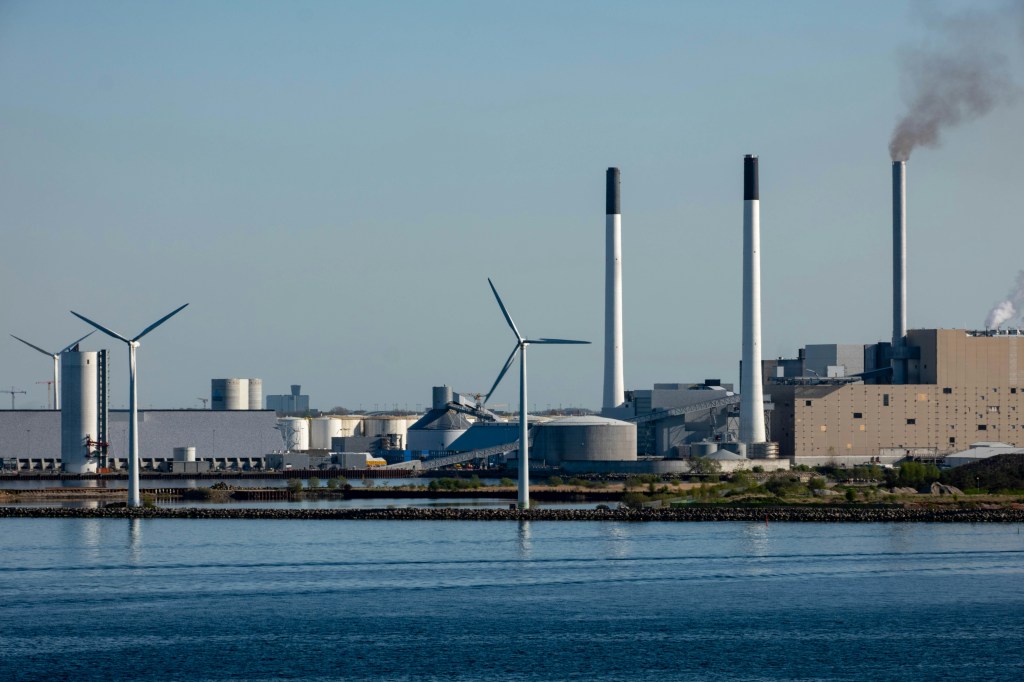
Featured image: Photo by Paul Kramer/Unsplash


Leave a Reply