
By Dyuti Khulbe/Public Praxis Forum
One of the enduring puzzles in public policy is that good intentions rarely guarantee good outcomes.
This is not a particularly controversial observation. Governments across the world introduce policies that are supported by research, informed by expert advice, debated in legislatures, and, in many cases, welcomed by the public. Some go on to produce meaningful change. Others achieve only part of what they set out to do. A few disappear almost unnoticed, surviving in official documents long after they have ceased to shape everyday life.
What makes this puzzling is that the explanation is often sought in the wrong place. Public debate tends to focus on the policy itself. Was it ambitious enough? Was it based on evidence? Was it politically popular? These questions matter, but they tell us surprisingly little about what happens after a policy leaves the minister’s desk. The more difficult challenge begins when broad political commitments encounter the institutions responsible for putting them into practice.
For a long time, policy scholarship paid far more attention to how policies were formulated than to what happened once they were adopted. Implementation was often treated as an administrative stage that followed the real work of policymaking. It was expected to be technical, procedural, and largely predictable. Experience suggested otherwise.
When political scientists Jeffrey Pressman and Aaron Wildavsky began studying a federal employment programme in Oakland during the early 1970s, they were not trying to develop a new theory of public policy. They were investigating a practical question: why had a programme that appeared carefully designed produced such modest results? Their research revealed that implementation was not a simple process of carrying out political decisions. It involved a long chain of organisations, officials, approvals, negotiations, and everyday judgments, each capable of reshaping the policy in subtle but significant ways.
Their work transformed implementation into a serious field of inquiry, and rightly so. Yet it also reflected the institutional realities of a particular context: a highly formalised administrative system within the United States. As implementation research expanded, scholars working in Asia, Africa, and Latin America began to point out that the relationship between policy and practice often looked very different elsewhere.
In many parts of the world, policies do not travel only through ministries and public agencies. They move through local governments, traditional authorities, community organisations, donor-funded programmes, informal networks, frontline workers, and citizens who adapt official rules to local realities. Administrative capacity may be uneven, legal institutions may coexist with customary systems, and public services often depend as much on relationships and negotiation as they do on formal procedures. Under these conditions, implementation cannot be understood simply by following an organisational chart.
This broader perspective has been developed particularly well by the anthropologist Jean-Pierre Olivier de Sardan, whose work on public action in West Africa shifts attention away from policy documents and towards what he calls the concrete ground. His research suggests that understanding implementation requires looking closely at how public servants, local communities, development practitioners, and citizens interpret policies in their everyday work. The question is no longer whether a policy was implemented exactly as intended. It is how policies are continually translated, adapted, negotiated, and sometimes transformed as they move through different institutional settings.
Seen this way, implementation is not the final chapter of policymaking.
It is where policymaking becomes public life.
Policies Rarely Arrive in a Vacuum
One reason implementation is so difficult is that policies never enter an empty institutional landscape. By the time a new policy reaches the organisations responsible for carrying it out, those organisations already have established routines, limited budgets, competing priorities, professional cultures, and relationships with the communities they serve. Implementation, therefore, is not simply a matter of following instructions. It involves fitting new political commitments into systems that were designed long before those commitments existed.
This becomes particularly visible in large public institutions. A ministry may draft an ambitious education policy, but schools continue to operate within existing staffing structures, examination systems, financial constraints, and local administrative practices. A health policy may introduce new standards of care, yet hospitals must still contend with shortages of personnel, procurement delays, ageing infrastructure, and unequal access to services. The policy itself may remain unchanged, while the realities surrounding it constantly reshape what is possible.
For this reason, implementation scholars often describe policies as being interpreted rather than simply executed. Rules rarely speak for themselves. They require people to make judgments about how they should be applied in situations that policy documents cannot fully anticipate.
It is here that Michael Lipsky’s idea of street-level bureaucracy became so influential. Studying teachers, police officers, social workers, and other frontline public servants, Lipsky argued that these actors do far more than carry out government decisions. Because they work directly with citizens under conditions of limited time, information, and resources, they inevitably exercise discretion. Their everyday decisions shape what public policy ultimately becomes. In practice, many citizens experience the state not through legislation or ministers, but through these routine interactions with frontline officials.
Lipsky’s work reminds us that implementation is not only an institutional process. It is also profoundly human.
Looking Beyond Formal Institutions
While scholars such as Pressman, Wildavsky, and Lipsky fundamentally changed how implementation was understood, many of their theories emerged from administrative systems characterised by relatively strong bureaucratic structures and clearly defined institutional responsibilities. As implementation research expanded into other parts of the world, scholars began asking whether these assumptions adequately captured the realities of governance elsewhere.
In many countries across Asia, Africa, and Latin America, public policies often travel through institutional environments that are considerably more complex than formal organisational charts suggest. Local governments interact with traditional authorities, community organisations, donor-funded programmes, religious institutions, informal networks, and political intermediaries. Citizens themselves frequently adapt, negotiate, or reinterpret policies according to local circumstances. Rather than moving through a single administrative chain, implementation becomes a process involving multiple centres of authority, each with its own sources of legitimacy.
This is one of the central themes in the work of Jean-Pierre Olivier de Sardan. Drawing on decades of anthropological research in West Africa, he argues that public policies cannot be understood solely by examining official procedures or institutional mandates. They must also be studied through the everyday practices of those responsible for implementing them. Policies, in his account, are continually translated as they encounter local realities, organisational cultures, and practical constraints that official documents rarely acknowledge.
A similar concern appears in the work of Indian public administration scholar Rumki Basu. Writing about governance in India, Basu argues that policy success depends not only on political commitment but also on administrative capacity, institutional culture, and the ability of public organisations to respond to diverse social realities. Designing effective policy is important, but implementation ultimately depends upon whether public institutions possess the organisational capability and flexibility to deliver what the policy promises.
Although these scholars work in different contexts, they arrive at a remarkably similar conclusion.
Policies do not fail simply because they encounter resistance.
They change because they encounter reality.
When Communities Become Policymakers
This raises another question that receives far less attention than it deserves.
Who actually implements public policy?
The instinctive answer is governments.
In practice, the picture is considerably more complicated.
Teachers interpret education policy in classrooms. Nurses translate health policy into everyday care. Municipal officials negotiate environmental regulations with local communities. Non-governmental organisations deliver programmes on behalf of governments and international organisations. Community leaders adapt public initiatives to local conditions, while citizens themselves decide whether policies are accepted, resisted, ignored, or reshaped through everyday practice.
Implementation, therefore, is not something governments do to society.
It is something institutions and societies continually negotiate with one another.
Recognising this changes how we think about public policy itself. It shifts attention away from the idea that implementation is simply the final administrative stage of policymaking and towards a broader understanding of governance as an ongoing process of interpretation, adaptation, and learning.
Perhaps this is why implementation remains one of the most difficult aspects of public policy to study. It cannot be understood by reading policy documents alone. It requires looking at how institutions function, how people exercise discretion, how communities respond, and how different forms of knowledge interact long after the political decision has been made.
Implementation Is Also a Form of Learning
One consequence of thinking about implementation in this way is that it changes how success is understood. Public discussions often treat policies as though they either succeed or fail, as though implementation were simply a test of whether governments kept their promises. Reality is usually more complicated.
Implementation also generates knowledge.
As policies move through institutions and into everyday life, they reveal assumptions that policymakers could not have anticipated from their offices alone. They expose practical obstacles, unintended consequences, conflicting priorities, and local innovations. Communities adapt policies to circumstances that official guidelines never considered. Frontline workers discover solutions that were absent from the original design. Sometimes these adaptations strengthen a policy. Sometimes they undermine it. Either way, implementation produces new knowledge about how public systems actually function.
This is one reason why many contemporary approaches to governance place increasing emphasis on monitoring, evaluation, feedback, and institutional learning. These processes are often presented as technical exercises, but they serve a much broader purpose. They recognise that policy design is rarely the final stage of public problem-solving. Good governance depends not only on making decisions, but also on learning from the consequences of those decisions once they enter public life.
Perhaps this is where implementation deserves greater attention than it usually receives. It is often described as the final stage of the policy cycle, yet in practice it frequently becomes the beginning of the next one. The experiences of citizens, public servants, local governments, researchers, and civil society organisations all generate forms of knowledge that can reshape future policies. Implementation therefore does not simply connect policy to practice. It also connects practice back to policy.
Beyond the Policy Document
Public policy is often imagined as a sequence of political decisions that begins with identifying a problem and ends with adopting a solution. This article suggests a rather different picture. Policies do not become meaningful because they are well written, well intentioned, or supported by compelling evidence. They become meaningful through the institutions that interpret them, the people who implement them, and the communities whose everyday experiences ultimately determine whether those policies make a difference.
Seen in this light, implementation is far more than an administrative exercise. It is where political ideas encounter institutional realities, where evidence meets practice, and where public commitments are tested against the complexity of everyday life. Understanding that process requires looking beyond policy documents towards the relationships, organisations, and forms of knowledge that shape how policies actually work.
Perhaps this is why implementation remains one of the least visible yet most important dimensions of public policy. It reminds us that governing is not only about deciding what should happen. It is about creating institutions capable of learning, adapting, and translating those decisions into meaningful public action.
The question, then, is not simply whether a policy is good.It is whether the institutions responsible for carrying it forward are equipped to turn good intentions into lived realities.
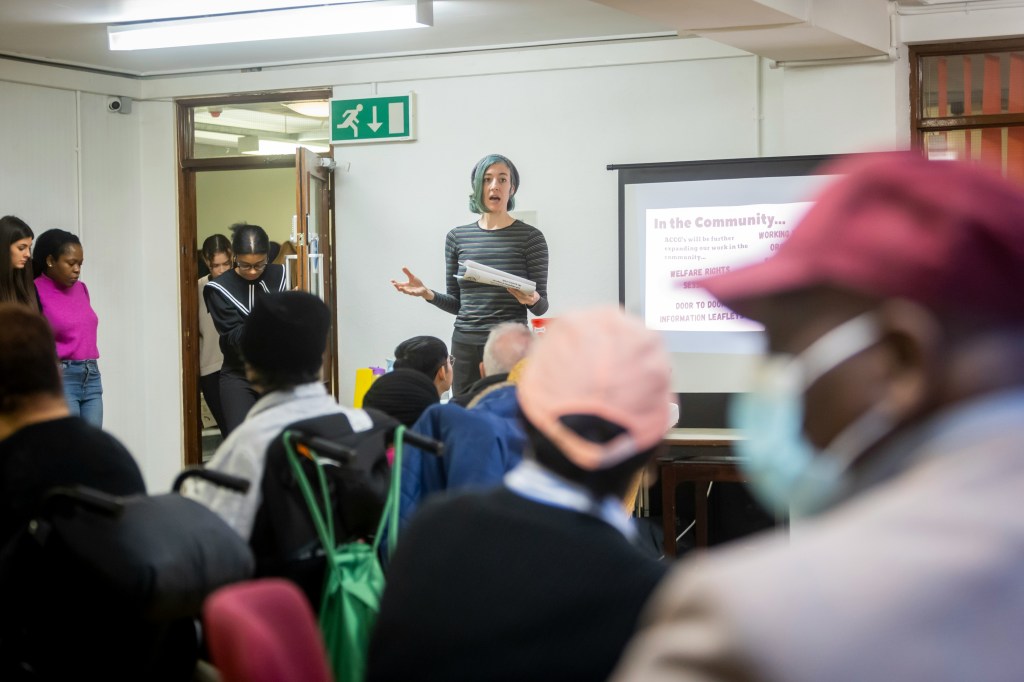
Featured image: Photo by Centre for Ageing Better on Unsplash.


Leave a Reply