
By Dyuti Khulbe/Public Praxis Forum
Over the last few years, an important question has become increasingly difficult to ignore: why do some stories travel so far while others barely move beyond the communities directly affected by them? Human rights violations are documented every day. Reports are published, campaigns are launched, and evidence is often easier to access than ever before. Yet visibility and accountability do not always move together.
We live in a time where injustice is more visible than ever before.
Human rights violations are documented in real time. Conflicts are livestreamed. Environmental destruction can be tracked through satellite imagery. Survivors share testimonies directly with global audiences. International organisations, journalists, researchers, and civil society groups produce an endless stream of reports, campaigns, investigations, and statements intended to draw attention to crises across the world.
Yet despite this unprecedented visibility, injustice persists.
Some forms of suffering briefly dominate international attention before fading from public conversation. Others remain largely invisible despite years of documentation. Evidence continues to accumulate, reports continue to be published, and awareness continues to be raised, but meaningful accountability often remains elusive.
The problem, increasingly, is not simply the absence of information. It is understanding what happens after visibility, and why awareness alone so often fails to produce meaningful change.
The Age of Visibility
For much of history, one of the greatest challenges facing communities experiencing violence, discrimination, or exploitation was simply being seen. Information travelled slowly, documentation was limited, and many abuses remained hidden from broader public view.
Today, the situation appears very different.
Digital technologies have transformed how information is produced, circulated, and consumed. A protest in one part of the world can be viewed globally within minutes. Satellite imagery can document environmental destruction in remote regions. Investigative journalists can trace supply chains across continents. International organisations and advocacy groups have access to communication tools that previous generations could hardly imagine.
In many ways, we are living in an age of unprecedented visibility.
This visibility matters. Documentation has exposed abuses that might otherwise have remained hidden. Communities have used digital tools to tell their own stories, challenge official narratives, and bring attention to issues that institutions previously ignored.
At the same time, increased visibility has not necessarily produced proportional accountability.
The assumption that exposure automatically leads to change deserves closer examination.
Working across journalism, development communication, and human rights spaces, I have repeatedly encountered the assumption that making an issue visible is itself a significant part of the solution. There is some truth to this. After all, it is difficult to address problems that remain hidden. But over time I have become increasingly interested in a different question: what happens when visibility is achieved and meaningful change still fails to follow?
The Assumption That Awareness Creates Change
Many advocacy efforts are built on a relatively simple idea: if people know about a problem, they will care about it. If enough people care, institutions will respond. Awareness becomes the first step toward change.
This assumption can be found across a wide range of spaces. Human rights campaigns seek to raise awareness of violations. Development organisations raise awareness about social issues. Journalists expose wrongdoing. Researchers publish evidence. International organisations release reports documenting harm.
Much of this work is important and often necessary.
But awareness itself is not accountability.
Knowing that a problem exists does not automatically create the political will required to address it. Information can generate concern without producing action. Visibility can create recognition without creating responsibility.
The belief that awareness naturally leads to change also rests on another assumption: that visibility is equally available to everyone. Yet histories of colonialism, unequal access to media infrastructures, and longstanding global power imbalances continue to shape whose experiences enter international conversations and whose remain marginal.
Not every community has the same ability to attract international attention. Not every form of suffering travels equally well across borders. Not every voice enters global conversations under the same conditions.
This becomes particularly important when considering which stories gain traction and which remain largely peripheral.
Not All Suffering Is Equally Visible
One of the uncomfortable realities of contemporary human rights and humanitarian work is that visibility itself is unevenly distributed.
The severity of harm alone does not determine whether an issue receives international attention. Visibility is also shaped by media infrastructures, geopolitical interests, donor priorities, historical narratives, linguistic accessibility, and the networks capable of amplifying particular stories.
Histories of colonialism continue to shape whose experiences are treated as globally relevant and whose remain peripheral. International conversations do not begin from a neutral position. Some regions, communities, and crises enter global discussions through well-established media, diplomatic, and institutional networks. Others struggle for recognition despite facing equally serious harms. Visibility is therefore not simply a question of communication; it is also a question of history and power.
As a result, some crises become matters of urgent international concern while others struggle to move beyond local or regional conversations.
The uneven distribution of visibility becomes apparent across a wide range of contexts. Violence against Muslims may receive extensive international coverage in some situations while being overlooked in others. Violence against Christians can become highly visible within particular political and media environments yet receive limited attention elsewhere. Violence against Hindus may generate significant public debate within India while remaining relatively peripheral to international conversations. Indigenous communities often face chronic and well-documented forms of violence, dispossession, and environmental harm that struggle to attract sustained global attention. Similar patterns can be observed in parts of Africa, where major humanitarian crises may receive less coverage than comparable events in Europe or North America. Small Island States, despite facing existential threats linked to climate change, frequently struggle to maintain visibility within global political agendas.
This can occasionally create the impression that some forms of suffering matter more than others. Communities may look at the attention given to one crisis and wonder why similar recognition is absent in their own context. These perceptions are often symptoms of a larger problem: the unequal distribution of visibility itself. The challenge is not to rank suffering, but to understand why recognition is distributed unevenly across different communities and crises.
These examples do not suggest that one community’s suffering matters more than another’s. Rather, they highlight a broader reality: visibility is not distributed evenly.
Some forms of suffering become globally legible. Others remain locally contained.
This is not simply a media problem. It is also a political one.
Questions of visibility are closely connected to questions of power.
Visibility Without Accountability
Even when harms become highly visible, accountability is far from guaranteed.
Perhaps one of the defining characteristics of the contemporary information environment is that societies can witness suffering repeatedly without necessarily addressing the structures that produce it.
Reports are published. Investigations are conducted. Images circulate globally. Institutions issue statements. Public outrage emerges. Yet meaningful change often remains limited.
In many contexts, the challenge is no longer simply the absence of evidence. Human rights organisations, journalists, researchers, and affected communities often produce substantial documentation. The question increasingly becomes how evidence is made visible, who finds it credible, and whether visibility translates into political traction.
Over time, visibility can become cyclical.
A crisis receives attention, generates concern, and then gradually disappears from public conversation as attention shifts elsewhere. New crises emerge, new reports are published, and the cycle begins again.
In some cases, visibility may even create the appearance of action without producing substantial change. Institutions can acknowledge criticism, release statements, establish frameworks, and demonstrate concern while leaving underlying structures largely intact.
Recognition matters. Documentation matters. Visibility matters.
But visibility alone cannot substitute for political action, redistribution of power, legal accountability, or structural reform.
Awareness can expose injustice. It cannot automatically dismantle it.
Who Gets Heard?
Visibility is not only about being seen. It is also about being heard.
These are not always the same thing.
Communities affected by violence, displacement, discrimination, or environmental harm are often represented through reports, campaigns, documentaries, policy discussions, and media coverage. Yet they may have limited influence over how their experiences are interpreted, communicated, or mobilised.
In many cases, affected communities enter international conversations through intermediaries. Researchers document their experiences. Journalists report on their realities. Advocacy organisations amplify their concerns. International institutions translate their experiences into policy language.
These processes can create important opportunities for recognition.
But they can also raise difficult questions.
Who gets to define the narrative? Whose voices are considered credible? Which forms of evidence are recognised as legitimate? Who speaks, and who is spoken for?
The challenge is therefore not simply ensuring that communities become visible. It is ensuring that visibility does not come at the cost of agency.
Being represented is not always the same as being heard on one’s own terms.
Beyond Awareness
None of this means that awareness is unimportant.
Many struggles for justice begin with visibility. Communities that have historically been ignored often fight first to have their experiences recognised at all. Documentation remains essential. Journalism remains essential. Research remains essential. Advocacy remains essential.
The challenge is recognising the limits of visibility.
Awareness can create recognition, but accountability requires something more. It requires political will, institutional pressure, sustained organising, legal mechanisms, and meaningful participation by affected communities themselves.
Visibility may open the door.
What happens afterward depends on the structures, institutions, and power relations that determine whether recognition is translated into action. Perhaps the challenge today is no longer only making injustice visible. It is understanding why some forms of visibility become politically meaningful while others remain little more than documentation of harms that everyone can see, but few are willing to address.
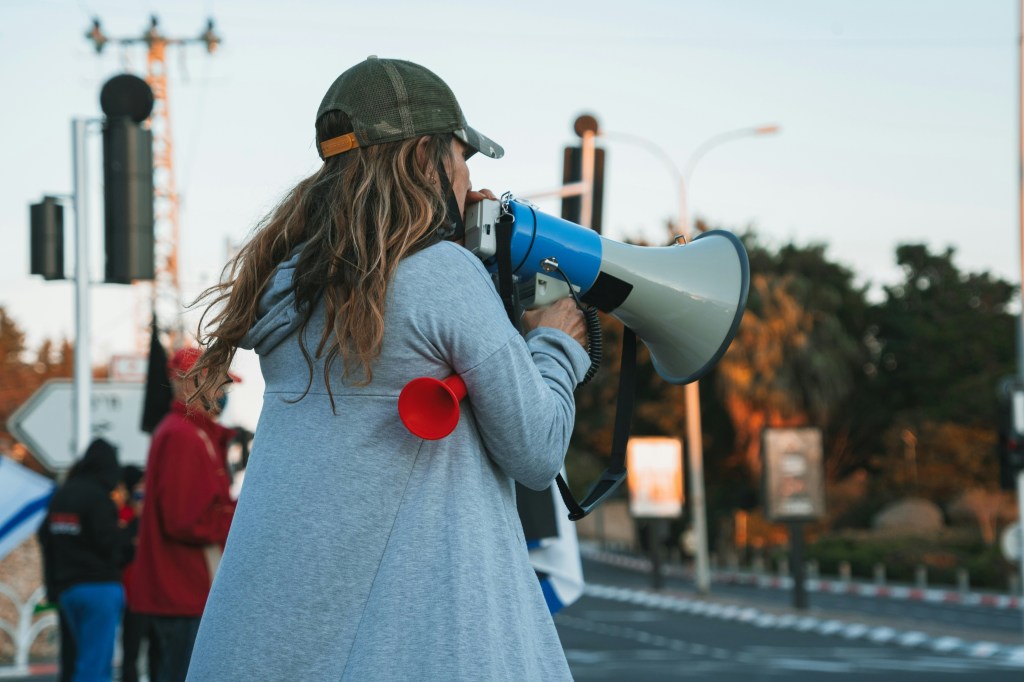
Featured image: Photo by Maayan Nemanov on Unsplash.


Leave a Reply